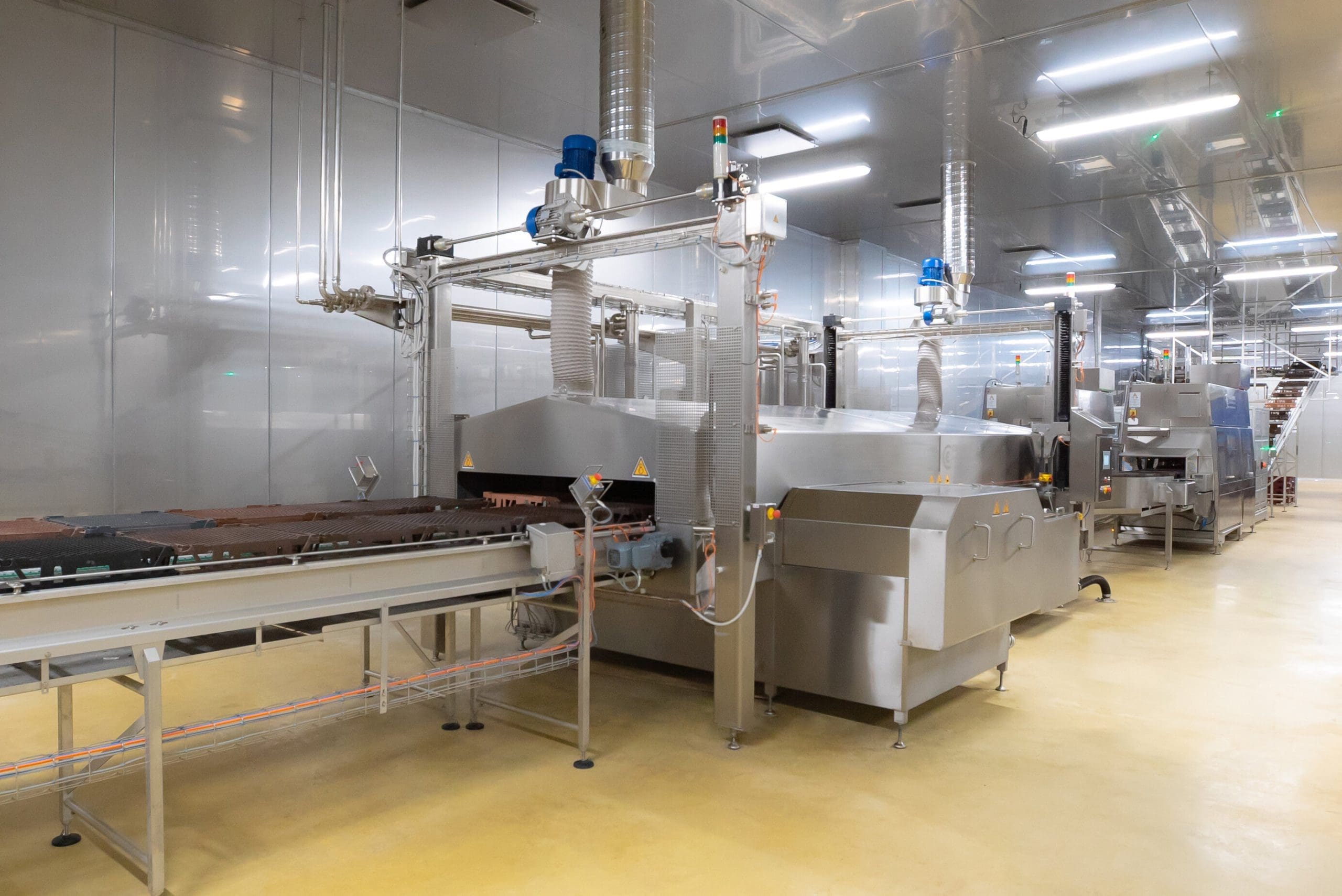
In Food & Beverage, versatility and flexibility have always been the two sides of the technical compromise. Increasingly, industry players find themselves having to manage small batches and a wide variety of formats. In this context, innovation means seeking versatility and process improvement in the components themselves, identifying those best suited to new automation design philosophies.
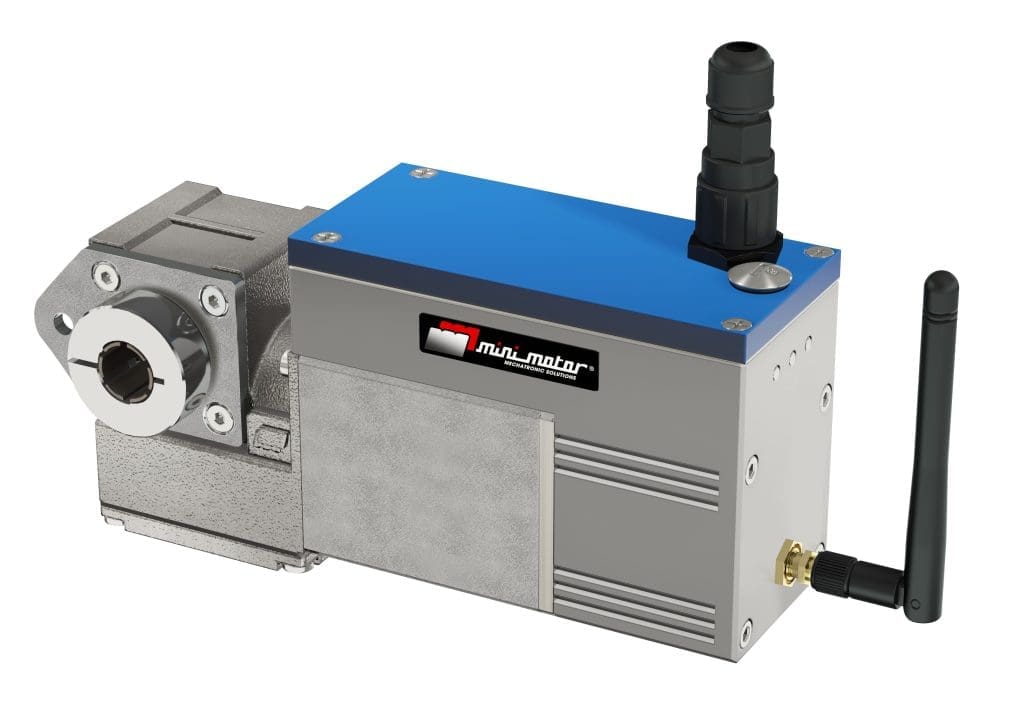

CoA 2.0, the “Wireless Revolution”: reduced cabling for format change
CoA 2.0 (Can Over Air) system was created to promote new design standards in industrial plants, freeing them from the physical constraints of field bus cabling. The architecture is based on proprietary radio technology capable of ensuring low radio latency for each individual motor.
The heart of the system is the Coordinator, which acts as a bridge between the PLC and the individual actuators, opening up new possibilities for scaling, remodeling, and reconfiguration, freeing filling, capping, or labeling lines from the constraints of bus cable routing. Maximum latency registered: 32 m/s for 20 motors.
New generation encoder: dynamic precision and inertial load management
Greater precision, greater efficiency. The new 24-bit HRE encoder has been integrated to allow our compact motors to operate under high mechanical stress conditions, typical of high- speed filling and end-of-line lines.

The main innovation lies in the ability to maintain extreme precision in dynamics, even in the presence of strong vibrations. But the real leap in quality concerns the management of inertial loads: advanced feedback algorithms compensate for mass fluctuations during sudden acceleration and deceleration phases.
This means less stress on the mechanics, a longer component life and, above all, the elimination of positioning errors that could compromise product integrity.
The heart of automation: the integrated drive brushless series
Despite increasingly advanced centralized control systems, the integrated drive brushless motor configuration remains one of the best practices for food processing. This solution meets two critical needs: reducing space requirements and simplifying wiring.
The real key is the versatility guaranteed by the multibus protocol.

The ability of these motors to interface natively with the main communication standards (EtherCAT, Ethernet/IP, PROFINET, Powerlink, Modbus, and CANopen) allows plug-and-play integration into any existing ecosystem.
This technological neutrality transforms the motor into a modular component ready for Industry 5.0. The versatility of the DBS line is also reflected in the high degree of customization of the digital options: from CSP functions, to configurable DO (Digital Output), to STO (Safe Torque Off), as well as the possibility of daisy chaining field communication.
Towards adaptive manufacturing CoA 2.0 technologies, new feed- back systems, and brushless integration are the pillars of flexible and responsive manufacturing, capable of responding to changing market demands. In 2026, Mini Motor’s goal is to transform technical complexity into operational simplicity, while ensuring that innovation is sustainable, efficient, and, above all, measurable.
For more information:sales@minimotor.com